





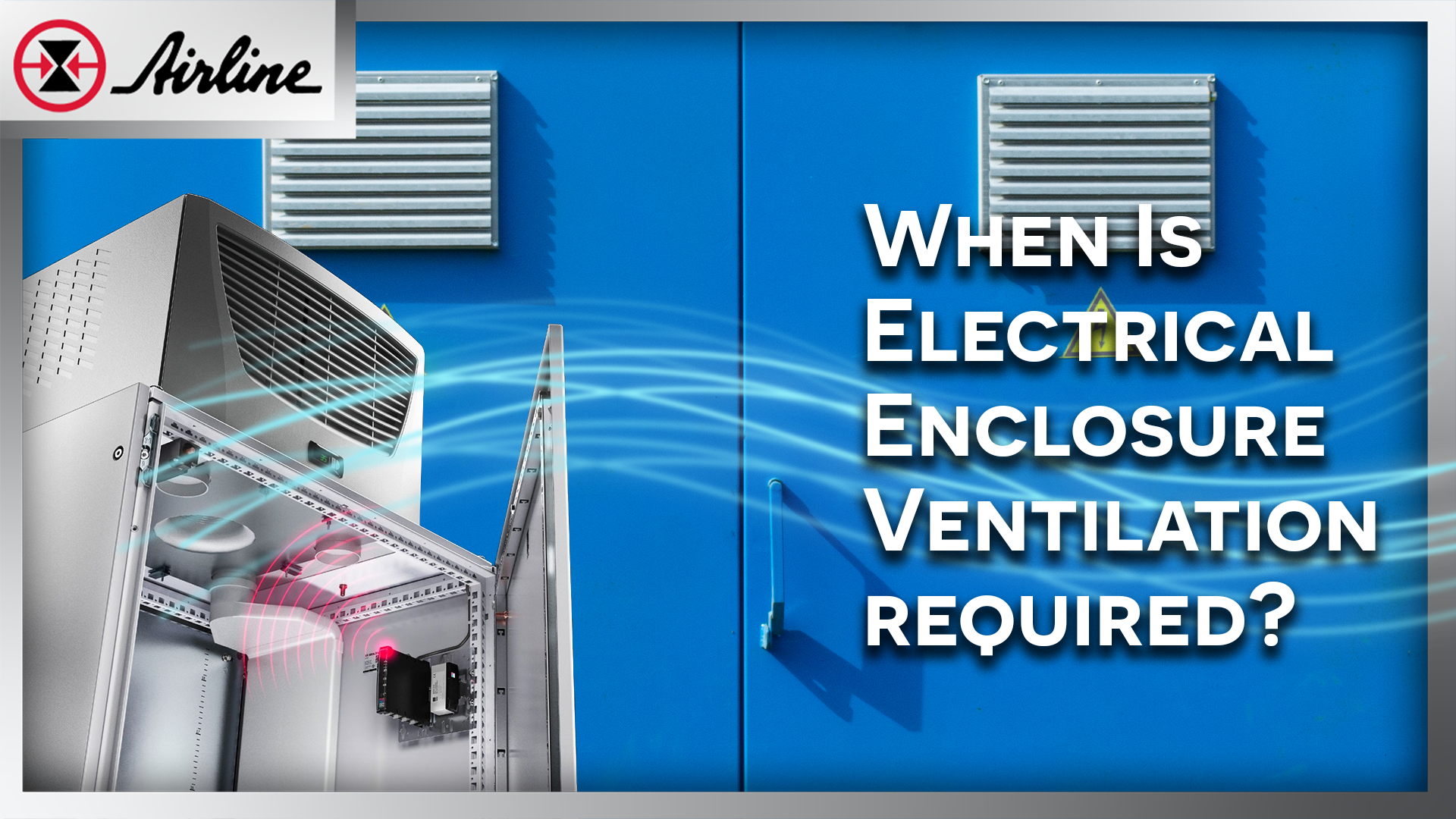

In many control panel projects, ventilation gets addressed late in the design process. The enclosure is selected, components are mounted, and only then does someone ask whether the panel will run too hot.
As power density inside panels increases, heat buildup becomes one of the most common causes of premature component failure, not just the common dust and moisture issues.
Drives, power supplies, and transformers all generate heat. Without proper ventilation or cooling, internal temperatures rise quickly, reducing equipment life.
Let’s look at when electrical enclosure ventilation is required, how to evaluate cooling needs, and which solutions work best in different environments.
Table of Contents (Jump to a Section):
Do Electrical Enclosures Need Ventilation? | Why Electrical Enclosures Overheat | Evaluate Electrical Enclosure Requirements | Ventilation & Enclosure Ratings | Ventilation Mistakes | Choosing the Right | Conclusion | Resources

Do Electrical Enclosures Need Ventilation?
Not all electrical enclosures require ventilation. The need for ventilation depends on several factors:
• Internal heat generation (watts)
• Ambient temperature surrounding the enclosure
• Allowable internal temperature rise
• Enclosure rating (NEMA type)
• Environmental conditions such as dust, moisture, or washdown
Small junction boxes with a few terminals usually generate little heat and may not require airflow. However, control panels containing drives, PLC power supplies, transformers, or dense electronics often generate significant heat and must be designed with ventilation or cooling in mind.
It’s also important to remember that “sealed” does not mean “thermally stable.” A tightly sealed enclosure protects against contaminants, but it also prevents heat from escaping.
Without a cooling strategy, temperatures can rise far beyond component ratings.
Why Electrical Enclosures Overheat
Heat buildup inside a control panel typically comes from a combination of internal heat sources and external environmental conditions.
Common Internal Heat Sources
Many standard control panel components generate heat during normal operation:
 • Variable frequency drives (VFDs)
• Power supplies
• Transformers
• Contactors and relays
• Internal lighting
• High-density component layouts
Even small watt losses from multiple devices can accumulate into significant heat.
External Contributors to Overheating
Environmental factors can make heat problems worse:
• High ambient temperatures in production areas
• Solar gain on outdoor enclosures
• Poor airflow around the enclosure
• Internal wiring duct blocking airflow paths
• Tight component spacing
When internal heat generation combines with high ambient temperature, natural heat dissipation through the enclosure walls may no longer be sufficient.
How to Evaluate Electrical Enclosure Ventilation Requirements
The best time to evaluate ventilation needs is during panel design, before components are installed.
A basic thermal evaluation typically includes three steps.
1. Determine Total Internal Heat Load
Start by calculating the total heat generated inside the enclosure.
This usually involves:
• Summing watt losses from major components
• Reviewing manufacturer heat dissipation data
• Understanding the difference between input power and heat output
For example, a device consuming 100 W of electrical power does not necessarily convert all of it to useful work — much of it becomes heat.
Most manufacturers publish heat loss data specifically for enclosure thermal calculations.
2. Define Acceptable Temperature Rise
Next, determine how much the enclosure temperature is allowed to rise above ambient.
Key considerations include:
• Maximum operating temperature of installed components
• Recommended operating ranges for reliability
• The effect of elevated temperature on component lifespan
Electronic components often follow a general rule: every 10°C increase in temperature can significantly reduce component life expectancy.
Designing for controlled temperatures helps extend equipment reliability.
3. Understand Basic Ventilation Calculation Concepts
At a high level, enclosure cooling is based on the relationship between:
• Heat load (watts)
• Airflow (CFM)
• Allowable temperature rise
How to Estimate Temperature Rise in a Sealed Electrical Enclosure
Metal enclosure walls can transfer heat to the surrounding air through conduction and convection. If the heat load is low enough, this passive heat transfer may keep internal temperatures within acceptable limits.
A simple way to estimate this is by comparing the enclosure’s heat load to its available surface area.
Step 1: Calculate Enclosure Surface Area
The total surface area of the enclosure determines how much heat can be released to the surrounding environment.
A = \frac{2((H \times L) + (H \times W) + (L \times W))}{144}
Where:
A = enclosure surface area (square feet)
H = height (inches)
L = length (inches)
W = width (inches)
The result is divided by 144 to convert square inches into square feet.
Step 2: Determine Heat Density
Next, calculate how much heat is being generated relative to the enclosure size.
Heat\ Density = \frac{P}{A}
Where:
P = total heat load (watts)
A = enclosure surface area (ft²)
This value represents the number of watts being dissipated per square foot of enclosure surface.
Example Calculation: Calculating Temperature Rise in an Electrical Enclosure
• 48 in height • 36 in width • 16 in depth The enclosure contains several components that generate a total of 300 watts of heat. First calculate the surface area. A=2((48×36)+(48×16)+(36×16))144A = \frac{2((48 \times 36) + (48 \times 16) + (36 \times 16))}{144}A=1442((48×36)+(48×16)+(36×16)) Surface area: A ≈ 42 ft²
Heat Density=30042Heat\ Density = \frac{300}{42}Heat Density=42300
≈ 7.1 W/ft²
If the surrounding room temperature is 75°F, the internal enclosure temperature would be expected to reach roughly 105°F. |
How to Calculate Airflow for Electrical Enclosure Ventilation
If the estimated temperature exceeds the allowable operating range of installed components, additional cooling will be required.
At that point, engineers typically evaluate forced airflow solutions. The airflow required to remove heat can be estimated using the relationship between heat load, airflow, and allowable temperature rise.
For air-ventilated enclosures, a common simplified relationship is:
Q = 3.16 \frac{P}{\Delta T}
Where:
Q = Required airflow (CFM)
P = Total heat load inside the enclosure (watts)
ΔT = Allowable temperature rise above ambient (°C)
This equation assumes typical air properties and is commonly used for estimating airflow requirements in industrial control panels.
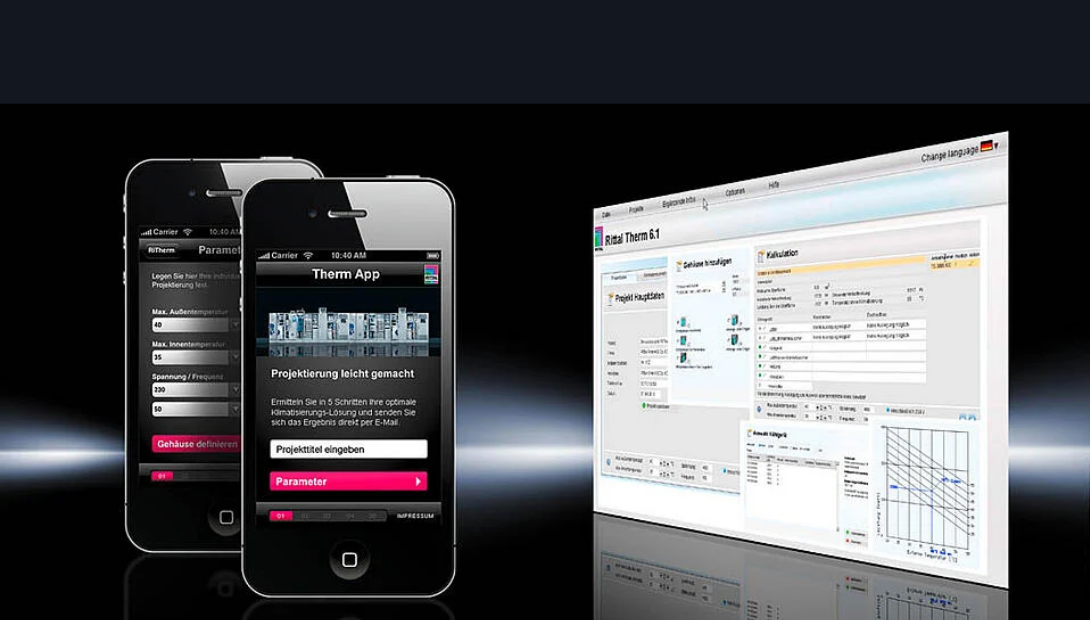 |
Rittal offers an easy software, RiTherm, to configure or modify custom, energy-efficient cooling units. |
Example: Calculating Required Airflow for an Electrical Enclosure
Total internal heat load
P = 240 W If the enclosure is installed in a room where the ambient temperature is 30°C, and the maximum desired enclosure temperature is 40°C, the allowable temperature rise is:
Now calculate the airflow requirement:
Required airflow:
This means the enclosure would require roughly 75–80 CFM of airflow to maintain the desired temperature rise.
• filter restrictions • aging fan performance • higher-than-expected ambient temperatures In this case, the selected fan system might be sized for 100 CFM. |
When the Calculation Indicates Ventilation Is Not Enough
If the airflow requirement becomes very large, or if the enclosure must remain sealed for environmental reasons (such as NEMA 4 or 4X), forced ventilation may not be suitable.
In those cases, engineers typically move to:
 • air-to-air heat exchangers
• air conditioners
• liquid cooling solutions

The best cooling approach depends on several factors:
• Total heat load
• Environmental conditions
• Required enclosure rating
• Reliability expectations
 |
Get a rundown of all of the types of cooling solutions like filter fans, air conditioners and more in this article. |
Ventilation and Enclosure Ratings (NEMA and UL Considerations)
Ventilation decisions also affect the environmental protection rating of the enclosure. Adding vents or fans may change the enclosure’s ability to block contaminants.
Common enclosure ratings include:
NEMA 1
Basic indoor protection. Ventilation openings are usually acceptable.
NEMA 12
Designed for industrial indoor environments with dust and debris.
NEMA 4
Sealed for protection against water and hose-directed spray.
NEMA 4X
Similar to NEMA 4, but with corrosion resistance for harsh environments.
Enclosures designed for washdown, outdoor, or dusty environments often cannot allow outside air to enter. In these situations, closed-loop cooling solutions are typically required.
Another important factor is condensation. Temperature swings inside sealed enclosures can create moisture buildup that damages electronics.
Common Electrical Enclosure Ventilation Mistakes
Many overheating issues occur because thermal planning was overlooked early in the design process.
Some of the most common problems include:
• Assuming enclosure size alone will dissipate heat
• Undersizing cooling fans
• Poor intake and exhaust placement
• Blocking airflow paths with wiring duct or components
• Ignoring filter maintenance requirements
• Not planning for future component additions
• Overlooking condensation risks in outdoor installations
A well-designed ventilation strategy addresses both current heat load and future expansion.
Ventilation as Part of Overall Control Panel Design
Electrical enclosure ventilation works best when it’s considered early in the control panel design process.
Thermal planning should account for:
• Component heat generation
• Layout and spacing inside the enclosure
• Airflow paths between components
• Future expansion or added devices
Positioning heat-generating components strategically and planning airflow paths can prevent many overheating problems before they occur.
Conclusion
Electrical enclosure ventilation plays a critical role in control panel reliability and equipment lifespan.
Overheating issues are rarely random — they are usually the result of insufficient thermal planning during design. By evaluating heat load, ambient conditions, and enclosure rating early in the process, engineers can choose the right ventilation or cooling strategy and avoid costly downtime later.
Proper ventilation ensures that control panels operate safely, efficiently, and reliably for years to come.

Additional Resources
Shop Fans, Blowers and Ventilation at Airline Hydraulics
Top Solutions for Cooling Electrical Enclosures
How to Size Climate Control Devices for Electrical Enclosures: A Practical Guide with RiTherm



Leave Comment