





For years, the control panel has been home to electrical and automation components. It keeps devices organized, protected, and centralized in one place.
But machine design is changing. Today, more manufacturers are looking at ways to move select automation and electrical components closer to the machine, closer to the process, and closer to the point of use. With the right product selection, components like remote I/O, valve control, power, connectivity, and communication devices can be mounted outside the enclosure.
Keep reading to learn why more engineers are moving components outside the control panel, what benefits this approach can offer, and which types of technologies are making it possible.
Key Takeaways- Moving select components closer to the machine can help save panel space and reduce wiring. - Field-mounted devices can support cleaner layouts, faster installation, and easier service. - Products such as remote I/O, valve manifolds, machine-mount power supplies, and connectivity devices can make this approach possible. - The right setup depends on the application, environment, control system, and service needs. |
Table of Contents (Jump to a Section):
Looking Beyond the Control Panel | Automation Tech that can Move Outside the Control Panel | What to Consider | The Control Panel Still Matters | Thinking Outside the Box | Airline Hydraulics: Your Local Distributor of Automation Components? | Additional Resources

Why Engineers Are Looking Beyond the Control Panel
Control panels are a key part of industrial automation. But as machines become more advanced, panels can fill up quickly. More sensors, valves, safety devices, power products, network connections, and monitoring tools all need space. That can make the panel larger, more complex, and more expensive to build.
At the same time, many automation components have become more rugged, more modular, and easier to connect in the field. Standard connectors, distributed I/O, industrial networks, and machine-mount designs have made it more practical to place certain devices outside the panel.
For manufacturers and OEMs, this opens the door to a different way of thinking. Instead of asking, “How do we fit everything inside the control panel?” teams can start asking, “Which components actually need to be there?”
Saving Space Inside the Panel
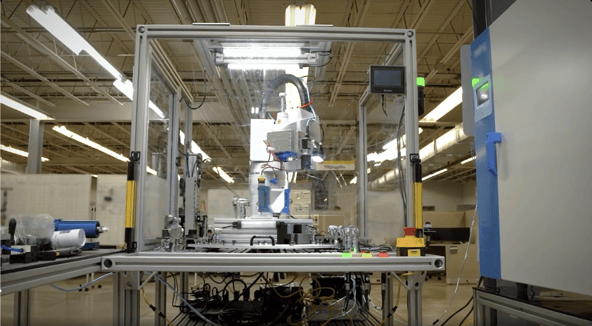
One of the biggest reasons manufacturers look at moving components outside the panel is space. Control panel space is valuable. When every device is mounted inside the enclosure, the panel can become crowded fast. Larger panels means higher costs: the enclosure itself may cost more, and the are able to reduce panel crowding.
Reducing Wiring Back to the Cabinet
Traditional wiring often means running many individual cables from field devices back to the control panel. As the number of sensors, valves, switches, and other devices grows, that wiring can become harder to manage. Field-mounted automation products can help simplify that layout.
For example, remote I/O can collect signals near the machine and send data back through an industrial network. Valve manifolds can be placed closer to pneumatic devices. Machine-mount connectivity products can help organize cables at the machine level instead of routing every connection back to the cabinet.
This can reduce long wire runs and help create a cleaner machine design, and make installation faster. Technicians may also be able to use pre-wired cables, standard connectors, and modular connection points.
Supporting More Modular Machine Design
Manufacturers are also looking for more flexibility in how machines are built, shipped, installed, and upgraded. A more modular machine design can make it easier to build repeatable sections of equipment, and makes it easier to add or change machine functions later.
When more components are mounted closer to the machine, each section can become more self-contained. A machine builder may be able to design repeatable modules with their own I/O, valve control, power distribution, or connection points. This can help OEMs and manufacturers reduce build time and make future changes easier.
Making Service and Troubleshooting Easier
Service access is another important reason to think outside the panel. When components are located closer to the machine, maintenance teams may be able to see device status, check connections, and troubleshoot issues faster.
Many field-mounted devices include status lights, diagnostics, or communication features that can help technicians identify problems. This can make it easier to find issues with sensors, valves, power, or communication points without starting inside the main panel, reducing downtime and speeding up repairs.
Improving Machine Layout and Cable Management
Moving components outside the panel is not just about saving space. It can also improve the overall machine layout. When devices are placed closer to the point of use, cable runs can be shorter and easier to follow. Tubing and wiring may be cleaner. Connection points may be easier to label and access. This can make the machine easier to build and easier to service later.
Automation Technologies That Can Move Outside the Control Panel
Moving components outside the control panel is not only about saving space. It can also help operators see machine status, alerts, and process information closer to where the work is happening.
easyE Remote Touch Display by Eaton
Give operators access to easyE4 control relay information from a more convenient location.
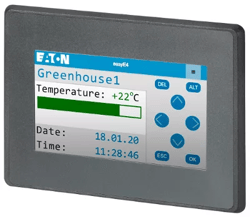
The Eaton easyE Remote Touch Display brings easyE4 visibility closer to the operator. Instead of opening or accessing the control cabinet to view the easyE4, teams can place the display where it is easier to see and use.
The Standard version mirrors the easyE4 display and keypad, while the Advanced version supports custom visualization through easySoft. This makes it useful for machines where the control cabinet is hard to access, access is restricted, or operators need machine information at the point of use.
Key benefits include:
Helps reduce the need to access the control cabinet for basic viewing
Supports plug-and-play setup with an RJ45 Ethernet cable
Standard version mirrors the easyE4 display and keypad

Multi-Protocol Ethernet I/O Blocks by Banner Engineering
Bring sensor and device data closer to the machine while giving teams more flexibility across common industrial networks.
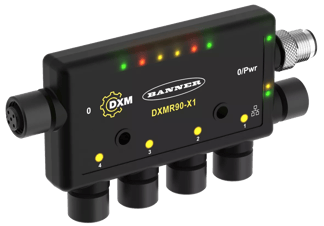
Banner’s multi-protocol Ethernet I/O blocks help collect signals from sensors and other field devices near the machine, then send that data back through industrial Ethernet protocols. This can reduce the need to run every device connection back to the main control panel.
Banner offers options such as the DXMR90 controllers, 4-port IO-Link Master, and 8-port IO-Link Master. These products can help consolidate device data and support communication through protocols such as EtherNet/IP, Modbus/TCP, and PROFINET.
Key benefits include:
- Collects data from sensors, lighting products, IO-Link hubs, and other devices
- Supports common industrial Ethernet protocols
- Helps simplify machine-level monitoring and control
- Gives machine builders more flexibility when designing distributed systems

NXR Series IP67 remote I/O With IO-Link by Omron
Bring sensor and device data closer to the machine while giving teams more flexibility across common industrial networks.
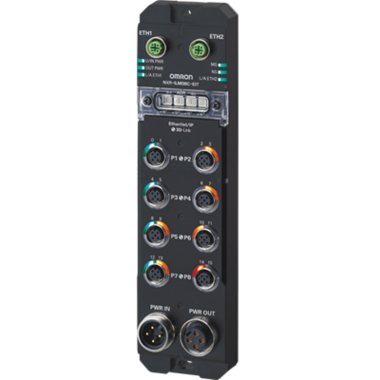
The Omron NXR Series is a remote I/O solution with IO-Link functionality for machine-level device connection. It allows IO-Link and digital I/O to be combined in one system, helping teams simplify wiring, collect field device data, and support more flexible machine designs.
The NXR Series is available in EtherNet/IP and EtherCAT network models, making it useful for different control system needs. It can also help simplify setup and replacement for automation teams working with distributed I/O.
Key benefits include:
- Brings remote I/O and IO-Link closer to the machine
- Helps reduce wiring back to the control panel
- Combines IO-Link and digital I/O in a flexible setup
- Helps collect device-level data for smarter machine monitoring

SMC EX600 Fieldbus System
Move pneumatic valve control and I/O closer to the machine while reducing the need to wire every signal back to the control panel.
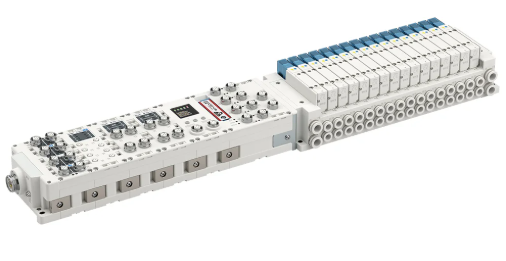
The SMC EX600 fieldbus system supports machine-mounted valve control and I/O for pneumatic automation applications. With master unit options that support CIP Safety, the EX600 can help connect safety-related devices and standard I/O closer to the machine instead of routing every signal back to the control panel.
The system can be configured with digital or analog input and output units, giving machine builders more flexibility when designing pneumatic systems, machine sections, or modular equipment.
Key benefits include:
- Supports pneumatic valve control and remote I/O at the machine level
- Offers master unit options with CIP Safety support
- Allows digital and analog input/output configurations
- Helps reduce wiring back to the control panel
- Supports modular machine and pneumatic automation designs
- Helps bring control, I/O, and safety communication closer to the point of use

RSio Remote Safe I/O by Banner Engineering
Move safety I/O closer to the machine while still supporting device-level diagnostics and safety-rated control.
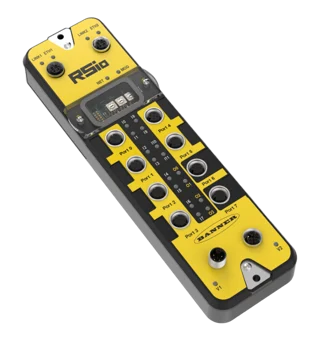
Banner’s RSio Remote Safe I/O is designed for machine-mounted safety applications. It brings Banner’s In-Series Diagnostics technology into CIP Safety systems and provides six hybrid I/O ports that can be configured for safety-rated or standard devices.
This helps reduce the need to bring every safety device connection back to the panel. It can also make troubleshooting easier by giving teams more detailed diagnostic information from connected safety devices.

RIP67 Power Supplies by Phoenix Contact
Put reliable 24 V DC power closer to the load instead of taking up more space inside the control cabinet.
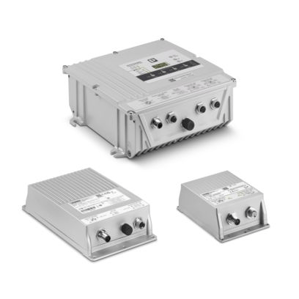
Phoenix Contact IP67 power supplies support decentralized machine power by allowing power supplies to be installed directly in the field. This can help reduce cable lengths, save control cabinet space, and make modular machine designs easier to build and maintain.
These power supplies are built for field installation and are available in several output classes, including options with integrated device protection. Some versions also include status signaling, HMI diagnostics, and IO-Link options for easier troubleshooting.
Key benefits include:
- Offers rugged housings for harsh industrial environments
- Provides 24 V DC power close to the machine
- Supports easier system planning, expansion, and maintenance

S8NR IP67 power Supply by Omron
Move protected DC power outside the control panel to reduce wiring, simplify installation, and support faster maintenance.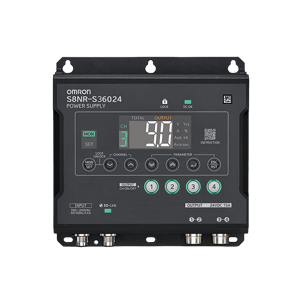
The Omron S8NR IP67 Power Supply is designed for out-of-panel power delivery in industrial environments. By placing power closer to the machine, manufacturers can reduce enclosure complexity and avoid routing as much power wiring back to the cabinet.
The S8NR uses a sealed housing and connector-based wiring to support field installation. Higher-power versions can include multiple independent output channels and electronic circuit protection, helping protect loads and simplify machine power distribution.
Key benefits include:
- Rugged housing for harsh environments
- Provides stable 24 V DC power close to the machine
- Offers options with multiple output channels
- Supports easier maintenance with status and diagnostic features

Oriental Motor Stainless Steel Brushless DC Motors
Place compact motion control closer to the machine in applications where the motor needs to handle dust, water, or frequent cleaning.
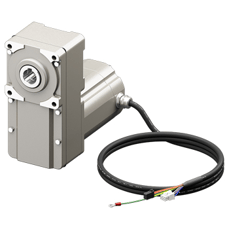
Oriental Motor’s stainless steel brushless DC motors are designed for equipment that needs reliable speed control in demanding environments. Instead of relying on a standard motor that may need extra protection, these motors are built with stainless steel features and dust- and water-resistant options for machine-level installation.
Brushless DC motors can also help support smaller machine designs because they provide strong performance in a compact package. For equipment with conveyors, rollers, pumps, or other motion needs, this can help save space while keeping speed control stable and efficient.
Key benefits include:
- Offers compact, efficient brushless DC motor performance
- Helps reduce the need for extra motor protection in wet or dusty areas
- Provides stable speed control for conveyors, rollers, pumps, and other equipment
- Available with dust- and water-resistant options for tougher applications

Special Mention: TTControl Mobile Controllers by HYDAC
Use rugged control hardware in challenging environments where a traditional cabinet-based controller may not be the best fit. 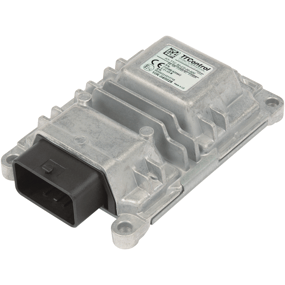
HYDAC TTControl is a special mention because it is not mainly about making the control panel smaller. Instead, it shows another way to think outside the traditional cabinet. These mobile controllers are designed for mobile machinery and off-highway equipment, but they can also be used in unique industrial applications that need rugged control in tough environments.
For applications with vibration, temperature changes, outdoor exposure, hydraulics, or limited room for a traditional control setup, TTControl can give teams another option beyond a standard panel-based controller.
Key benefits include:
- Supports rugged control in demanding environments
- Can be used in unique industrial applications where a standard panel-based controller may not be ideal
- Designed for mobile machinery and off-highway equipment
- Helps bring control closer to hydraulic or machine functions
- Supports applications with vibration, temperature, or outdoor exposure concerns
- Offers another option for control system design outside the traditional cabinet
Special Mention: M22 Advanced Indicator by Eaton
Reduce panel clutter by replacing multiple indicators with one compact, customizable display.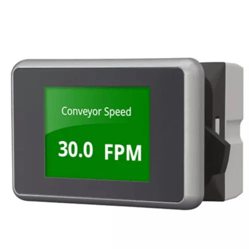
While the Eaton M22 Advanced Indicator is technically still mounted on the panel, we wanted to mention it because it supports the same goal: making smarter use of limited control panel space. Instead of adding several separate indicator lights or a full HMI, manufacturers can use one compact display to give operators clear machine feedback.
The display can show machine status, alerts, process steps, and sensor readings on up to 24 custom screens. Because it fits a standard 22.5 mm mounting hole, it can be used in new designs or retrofit projects where panel space is limited.
This is a good option for machines that need more than a basic indicator light, but do not need the size or cost of a full HMI.

What to Consider Before Moving Automation Components Outside the Control Panel
Outside-the-panel automation components can offer real benefits, but they need to be selected carefully. Not every device belongs outside the enclosure. Every application has different environmental, electrical, communication, and service requirements. Before moving automation or electrical components outside the control panel, manufacturers should review the following factors.
Environment
The device needs to match the environment where it will be installed. That may include dust, moisture, washdown, temperature, vibration, or exposure to other plant conditions. Some products are built for tough environments, while others are not. Ratings and specifications should always be reviewed before placing a component outside the panel.
Power, Communication, and Control System Compatibility
Moving components closer to the machine changes how power and communication are handled.
Before placing a device outside the panel, manufacturers should confirm that it can connect properly to the rest of the control system. This includes voltage, current, grounding, communication protocol, I/O type, connector style, cable length, and safety requirements.
Service Access
A field-mounted device should be easy to reach, inspect, and replace when needed. If a component is mounted in a hard-to-access area, it may create new maintenance problems. Good placement can make service easier. Poor placement can make it harder.
Cable and Tubing Layout
Shorter wiring can be a major benefit, but cable management still matters. Cables should be routed safely, labeled clearly, and protected from damage. The same is true for pneumatic tubing when valve manifolds or other pneumatic products are mounted near the machine.
Compatibility
The selected components need to work with the rest of the control system. That includes communication protocol, I/O type, connector style, voltage, safety requirements, and available space on the machine.
This is where working with an experienced automation partner can help.
The Control Panel Still Matters
Just a final note here: Thinking outside the box does not mean removing the control panel from the design. The control panel still plays a major role in protecting and organizing key electrical and automation equipment. Many components still belong inside the enclosure.
The real opportunity is in being more selective. Instead of putting everything inside the panel by default, manufacturers can review which components are better suited to machine-level mounting. In many cases, a hybrid approach works best.
Some components stay in the panel. Others move closer to the machine. Together, they create a more flexible and efficient system.
Thinking Outside of the Box
In summary, as automation components become more rugged, connected, and machine-ready, manufacturers have more freedom to decide where components should go. By moving the right devices outside the control panel, teams can save space, reduce wiring, simplify installation, and build machines that are easier to service and adapt. The key is knowing what belongs in the panel, what can move closer to the machine, and how to bring the full system together.
That is where it pays to think outside the box.

Airline Hydraulics: Your Local Distributor of Automation Components
As your local distributor of automation, electrical, pneumatic, connectivity, and machine safety components, Airline Hydraulics helps manufacturers and OEMs find products that fit both the application and the timeline.
With our specify, stock, support approach, we can help you:
Specify the right components for your machine design, control system, and environment
Stock trusted automation products from leading manufacturers to help keep projects moving
Support your team with product knowledge, application guidance, and responsive service after the sale
Whether you are trying to save panel space, reduce wiring, support a modular machine build, or make service easier, Airline can help you compare options and source the right solution.

Additional Resources
Explore the Spotlighted Products



Leave Comment