






Electrical systems are critical to keeping facilities safe, productive, and operational. But when electrical maintenance is handled only after something fails, the risks can be costly. Equipment damage, unplanned downtime, safety hazards, and compliance concerns can all become bigger problems than they need to be.
That is why NFPA 70B is becoming a major focus for facility teams, maintenance leaders, plant engineers, and safety managers. In this guide, we will cover what NFPA 70B is, why it matters, what has changed, and how facilities can start building a stronger electrical preventive maintenance program.
Key Takeaways- NFPA 70B is the Standard for Electrical Equipment Maintenance, and as of 2023, all electrical maintenance programs must comply with its requirements. - Electrical preventive maintenance can help extend equipment life, improve reliability, and reduce wasted energy. - Facility owners must establish a documented Electrical Maintenance Program that outlines procedures, frequency, personnel qualifications, and corrective actions. - The 2026 edition continues the standard's evolution, expanding focus on condition-based planning, continuous monitoring, and safer maintenance practices. |
Table of Contents (Jump to a Section):
What is NFPA 70b? | Why Electrical Preventative Maintenance Matters | How NFPA 70B Has Changed | Who is Responsible for NFPA 70B Compliance? | Electrical Preventative Maintenance Program | Maintenance Plan VS Maintenance Program | Preventative, Predictive, and Corrective Maintenance | Continuous Monitoring & Safer Maintenance | Common Gaps | How to Start | When To Use | Conclusion | Need Help? | Additional Resources | FAQ

What Is NFPA 70B?
NFPA stands for the National Fire Protection Association, the organization that develops widely used safety codes and standards. NFPA 70B is the Standard for Electrical Equipment Maintenance. It gives facilities a clear framework for keeping electrical equipment in safe, reliable working condition.
NFPA 70B supports a more planned approach to electrical preventive maintenance by helping organizations move away from reactive repairs and toward a documented electrical maintenance program.
In simple terms, NFPA 70B helps facility and maintenance teams answer important questions:
- What electrical equipment needs to be maintained?
- How often should equipment be inspected or tested?
- What condition is the equipment in?
- What records should be kept?
- What should happen when a problem is found?
- How can maintenance reduce risk to workers, equipment, and daily operations?
The standard applies to electrical, electronic, and communication systems in many types of buildings, including industrial plants, commercial buildings, institutional facilities, data centers, and other locations with electrical power distribution equipment.
At its core, NFPA 70B helps organizations build a practical electrical preventive maintenance program. The goal is not just to “check the box.” The goal is to create a documented electrical maintenance program that supports safety, system reliability, and long-term performance across the entire electrical system.
Why Electrical Preventive Maintenance Matters
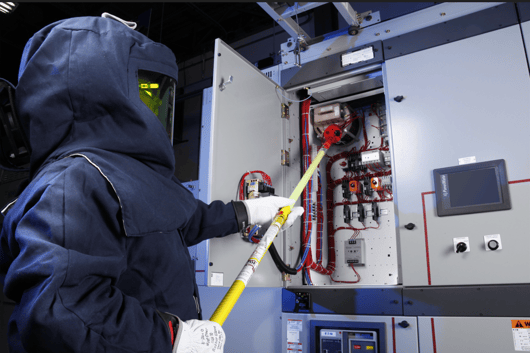
Electrical preventive maintenance is the planned inspection, testing, and servicing of electrical equipment before a failure occurs. Without a strong preventive maintenance plan, equipment problems can go unnoticed until they cause system failures, damage, or unsafe working conditions.
A preventive electrical maintenance program helps facilities:
- Reduce unplanned downtime
- Improve safety for workers and equipment
- Extend the life cycle of electrical infrastructure
- Identify major problems earlier through regular inspections
- Support compliance with applicable standards
- Avoid emergency repairs when possible
Preventive maintenance is especially important because electrical equipment can appear normal from the outside while hidden issues are developing inside. A documented electrical maintenance plan gives teams a process for finding those issues earlier and responding before small problems become larger failures.
How NFPA 70B Has Changed in 2026
NFPA 70B has become more important because of how the standard has evolved.
Before 2023, NFPA 70B was considered a set of recommended practices. The 2023 update changed that by moving NFPA 70B from advisory guidance to a standard with mandatory language. This means facility teams now have clearer expectations for developing, implementing, and maintaining an Electrical Maintenance Program.
The 2026 edition continues that evolution. It expands the way organizations should think about electrical maintenance by placing more focus on:
- Preventive maintenance
- Predictive maintenance
- Corrective maintenance
- Equipment condition
- Risk-based maintenance planning
- Design strategies that reduce maintenance hazards
- Continuous monitoring and data trends
- Operational technology cybersecurity
This means facilities are expected to think beyond basic inspection schedules. A strong electrical preventive maintenance program should reflect the system’s condition, how critical assets are to operations, and how maintenance tasks can be performed as safely as possible.
Who Is Responsible for NFPA 70B Compliance?
NFPA 70B helps define what a proper electrical maintenance program should include, but responsibility for the program typically falls on the facility owner, equipment owner, or organization responsible for maintaining the electrical system.
NFPA develops the standard, but it is not usually the group that audits or enforces it. Enforcement depends on how NFPA 70B is adopted or referenced in a specific location, contract, insurance requirement, or company policy.
In many cases, compliance may be reviewed by an Authority Having Jurisdiction, often called the AHJ. This may include a local electrical inspector, fire marshal, building official, insurance representative, or another organization with authority over the facility, equipment, or work being performed.
There is not one universal NFPA 70B audit that works the same way for every facility. Instead, facilities may need to show that they have a documented electrical maintenance program and records to prove the work is being completed. This may come up during an inspection, insurance review, safety audit, internal EHS review, or investigation after an electrical incident.
That is why documentation is so important. A clear electrical maintenance program should show:
- What electrical equipment is included
- When inspections and testing are performed
- Who is qualified to perform the work
- What maintenance tasks are required
- What problems were found
- What corrective actions were completed
- When the program was reviewed or updated
In short, the best way to prepare for an inspection, audit, or insurance review is to maintain a clear, current, and documented electrical maintenance program.
What Should an Electrical Preventive Maintenance Program Include?
An electrical preventive maintenance program is more than a checklist. It is a documented process for inspecting, testing, servicing, correcting, and reviewing electrical equipment over time.
Here are the key elements a strong program should include.
1. Equipment Inventory
@2x.png?width=73&height=75&name=Computer-Aided%20Manufacturing%20(CAM)@2x.png) The first step is knowing what electrical equipment is installed in the facility. An equipment inventory may include switchgear, switchboards, motor control centers, panelboards, transformers, circuit breakers, protective devices, protective relays, busway, cables, terminations, generators, automatic transfer switches, drives, motor systems, and power monitoring equipment.
The first step is knowing what electrical equipment is installed in the facility. An equipment inventory may include switchgear, switchboards, motor control centers, panelboards, transformers, circuit breakers, protective devices, protective relays, busway, cables, terminations, generators, automatic transfer switches, drives, motor systems, and power monitoring equipment.
This inventory gives the maintenance team a clear picture of every equipment type that needs to be inspected, tested, maintained, and documented.
2. Updated One-Line Diagrams
 A one-line diagram shows how electrical installations are connected. It is one of the most important documents for electrical maintenance, arc flash analysis, troubleshooting, and future system updates.
If the one-line diagram is missing, outdated, or inaccurate, it can make maintenance planning harder and increase risk during electrical work. A current one-line diagram helps teams understand the system layout, identify equipment, and plan work more safely.
3. Equipment Condition Assessment
 NFPA 70B places importance on the condition of electrical equipment. Instead of relying only on age or a fixed calendar schedule, teams should consider how equipment is actually performing and where it is located.
This review may include:
- Equipment age and operating environment
- Load levels and maintenance history
- Test results and signs of overheating
- Corrosion, dust, moisture, or contamination
- Known issues, previous failures, or nuisance trips
4. Maintenance Intervals
Maintenance intervals should be based on equipment type, condition, use, criticality, environment, manufacturer guidance, and applicable NFPA 70B requirements.
 Equipment in harsh environments with heat, dust, moisture, vibration, or heavy loads may need more frequent attention. Critical systems may also need closer review because of their impact on safety, production, or business continuity.
A good electrical maintenance plan should clearly define when equipment will be inspected, tested, serviced, and reviewed.
5. Inspection and Testing Tasks
The program should outline the specific maintenance tasks required for each type of equipment.
Common electrical preventive maintenance tasks include:
- Visual inspections of electrical connections, enclosure panels, and wiring
- Cleaning with appropriate tools and methods
- Torque checks where required
- Infrared thermography or thermal inspections to detect hot spots
- Insulation resistance testing
- Breaker testing and protective device testing
- Relay testing and calibration
- Grounding checks
- Transfer switch testing
- Power quality review
- Equipment labeling review
6. Corrective Action Process
Finding a problem is only useful if there is a process to fix it.
A strong electrical maintenance program should include a corrective action process that defines:
- How problems are reported
- Who reviews the findings
- How issues are prioritized
- Which items require immediate action or equipment replacement
- How repairs are tracked
- How completed work is documented
- When follow-up testing is needed
7. Worker Safety and Training
 Electrical maintenance is closely tied to worker safety. Qualified personnel should perform maintenance tasks using the right procedures, tools, and safety practices.
A strong program should support:
- Electrical safety training
- Arc flash awareness
- Proper PPE selection
- Lockout/tagout procedures
- Equipment labeling
- Clear work instructions
- Hazard reduction where possible
8. Ongoing Program Review
An electrical maintenance program should be reviewed and updated as equipment, operations, and facility needs change. A well-documented program helps track maintenance activities, support audits, and guide future decisions.
Updates may be needed when:
- New equipment is installed
- Existing equipment is modified
- Electrical loads change
- A study is completed
- An incident or failure occurs
- Maintenance results show repeat issues
- Standards or requirements change
The best programs are not static. They improve over time.
Electrical Maintenance Plan vs. Electrical Maintenance Program
The terms “electrical maintenance plan” and “electrical maintenance program” are often used interchangeably, but they do not mean exactly the same thing.
An electrical maintenance plan is the schedule of tasks, inspections, tests, and work activities needed to maintain electrical equipment. Some people also refer to this as preventive maintenance scheduling.
An electrical maintenance program is the larger process that manages the plan. It includes documentation, roles, responsibilities, training, testing, corrective actions, recordkeeping, and ongoing review.
In short:
- The plan explains what maintenance work needs to happen.
- The program explains how that work is managed, tracked, and improved.
NFPA 70B points facilities toward a more complete program, not just a simple maintenance checklist.
Preventive, Predictive, and Corrective Maintenance
NFPA 70B supports a complete view of electrical maintenance. That includes preventive, predictive, and corrective maintenance. You can learn more about these strategies in our blog post: Maintenance Strategies Explained.
A strong NFPA 70B electrical maintenance program should include all three. Preventive maintenance helps reduce risk, predictive maintenance improves visibility, and corrective maintenance ensures problems are addressed.
How Power System Studies Support NFPA 70B Planning
Power system studies play an important role in building an electrical maintenance program. These studies provide data that helps facilities understand the current condition, capacity, and safety risks of their electrical system.
These studies turn an electrical maintenance plan into a more complete and data-driven program.
Short-Circuit and Protective Device Evaluation Study
A short-circuit study calculates available fault current at key points in the electrical system. This helps determine whether equipment is properly rated and can identify equipment that may need replacement, adjustment, or further review.
Protective Device Coordination Study
A protective device coordination study examines how circuit breakers, fuses, and relays work together. Proper coordination can help reduce nuisance tripping and improve system reliability.
Arc Flash Analysis
An arc flash analysis calculates potential incident energy at electrical equipment locations. It supports safer work practices by helping workers understand safety risks before performing energized electrical work.
Continuous Monitoring and Safer Maintenance
Traditional inspections provide a snapshot of equipment condition at one point in time. While scheduled inspections are still important, they may not catch every issue, especially problems that happen between maintenance intervals.
Continuous monitoring can help fill that gap. Learn more about condition-based monitoring in our article: How Condition-Based Monitoring Supports Predictive Maintenance Strategies
Common Gaps in Electrical Preventive Maintenance Programs
Many facilities already perform some type of electrical maintenance. However, their program may still have gaps.
Common gaps include:
- Missing or outdated one-line diagrams
- Incomplete equipment inventory
- No documented electrical maintenance plan
- Outdated arc flash study or labels
- No recent short-circuit or coordination study
- Limited testing of protective devices
- Transfer switches not included in the maintenance program
- No process for tracking corrective actions
- Maintenance based only on calendar dates
- Limited use of condition-based monitoring
- Lack of worker training for qualified personnel
- No clear owner for the electrical maintenance program
- Poor documentation of completed work
These gaps can make it harder to prove what has been maintained, what still needs attention, and where the greatest safety hazards and reliability risks are.
How to Start Building an NFPA 70B Electrical Maintenance Plan
Getting started does not have to mean solving everything at once. The best first step is to build a clear picture of your current system and maintenance practices.
Step 1: Gather existing documentation. Start with records you already have, such as one-line diagrams, equipment lists, previous study reports, arc flash labels, maintenance records, test reports, incident reports, and manufacturer instructions.
Step 2: Verify installed equipment. Compare your records against what is actually installed. Update missing, outdated, or inaccurate information.
Step 3: Review equipment condition. Look at the condition of each major electrical asset. Consider age, environment, use, maintenance history, and test results.
Step 4: Identify critical equipment. Some equipment has a greater impact on safety, production, or business continuity. Identify which assets are most critical to operations.
Step 5: Set maintenance tasks and intervals. Define what needs to be inspected, tested, and maintained. Set intervals based on equipment type, condition, criticality, and operating environment.
Step 6: Complete needed studies. If studies are missing or outdated, consider completing a short-circuit study, protective device coordination study, and arc flash analysis.
Step 7: Build a corrective action list. Document issues found during inspections, testing, and studies. Prioritize them based on safety, reliability, downtime risk, and urgency. This is where failure analysis can help identify root causes.
Step 8: Review and improve the program. Revisit the program regularly. Update it when equipment changes, conditions change, or new risks are identified.
When to Use Electrical Preventive Maintenance Services
Many facilities do not have the internal time, tools, or engineering resources to build and maintain a complete electrical preventive maintenance program on their own.
Electrical preventive maintenance services can help when:
- Your team needs help creating or updating one-line diagrams
- Your arc flash study is outdated
- You need a short-circuit or coordination study
- You need support with electrical safety training
- Your testing equipment or procedures need updating
- You want to move toward predictive or condition-based maintenance
- Your team needs support across multiple sites
- You need help building a documented electrical maintenance program
Outside support can help turn maintenance from a reactive process into a more structured and reliable program.
Conclusion: NFPA 70B Is About Safer, Smarter Electrical Maintenance
NFPA 70B gives facilities a clearer framework for managing electrical equipment maintenance. It helps teams move beyond reactive repairs and toward a documented program built around safety, reliability, equipment condition, and continuous improvement.
A strong electrical preventive maintenance program can help reduce unplanned downtime, support safer work, improve equipment performance, and give teams better information for long-term planning.
Whether your facility is starting from scratch or improving an existing electrical maintenance plan, the first step is understanding the current state of your electrical system.
Need Help With NFPA 70B and Electrical Preventive Maintenance?
Airline Hydraulics works with customers to support safer, more reliable electrical systems through our partnership with Eaton.
Through this partnership, Airline can help connect facilities with Eaton electrical preventive maintenance services, including data collection, short-circuit studies, protective device coordination studies, arc flash analysis, mitigation recommendations, electrical safety training, failure analysis, on-site investigations, and preventive or predictive maintenance planning.
If your team is reviewing NFPA 70B, updating an electrical maintenance program, or looking for support with arc flash and power system studies, Airline Hydraulics can help you take the next step.

Additional Resources
Airline Predictive Maintenance Sources
Contact Us for Predictive Maintenance
Read More Maintenance Articles
FAQ: NFPA 70B and Electrical Preventive Maintenance |
Is NFPA 70B legally mandatory for my facility?
NFPA 70B becomes enforceable when adopted by local codes, regulations, or contractual requirements. Many insurers and corporate standards treat it as a de facto requirement. Even where it is not formally adopted, courts and regulators may reference NFPA 70B as the accepted standard of care for electrical maintenance practices. Check with your authority having jurisdiction, risk managers, and legal counsel to understand how it applies in your region.
How does NFPA 70B relate to NFPA 70E?
NFPA 70B focuses on maintaining electrical equipment and keeping assets reliable. NFPA 70E addresses electrical safety in the workplace, including arc flash risk assessment, PPE, and safe work practices. Effective electrical preventive maintenance under NFPA 70B supports NFPA 70E goals by reducing the likelihood and severity of electrical faults and incidents. Together, these standards help improve safety and protect workers.
Can in-house staff handle NFPA 70B maintenance?
NFPA 70B allows in-house teams to perform maintenance if they are qualified electrical workers with appropriate training, tools, and procedures. Many facilities use a hybrid model: internal teams and licensed electricians handle routine inspections while specialized contractors perform advanced testing and major overhauls. Evaluate internal capabilities honestly and make sure any external providers follow NFPA 70B standards.
What are the biggest benefits of following NFPA 70B?
Electrical preventive maintenance reduces energy consumption by 10–15% and can extend equipment lifespan by 20–30%. It significantly reduces the risk of electrical failures, supports compliance, and helps facilities avoid fines. Beyond the numbers, a strong program reduces safety risks, supports business continuity, and gives facilities better data for long-term capital planning. |



Leave Comment