





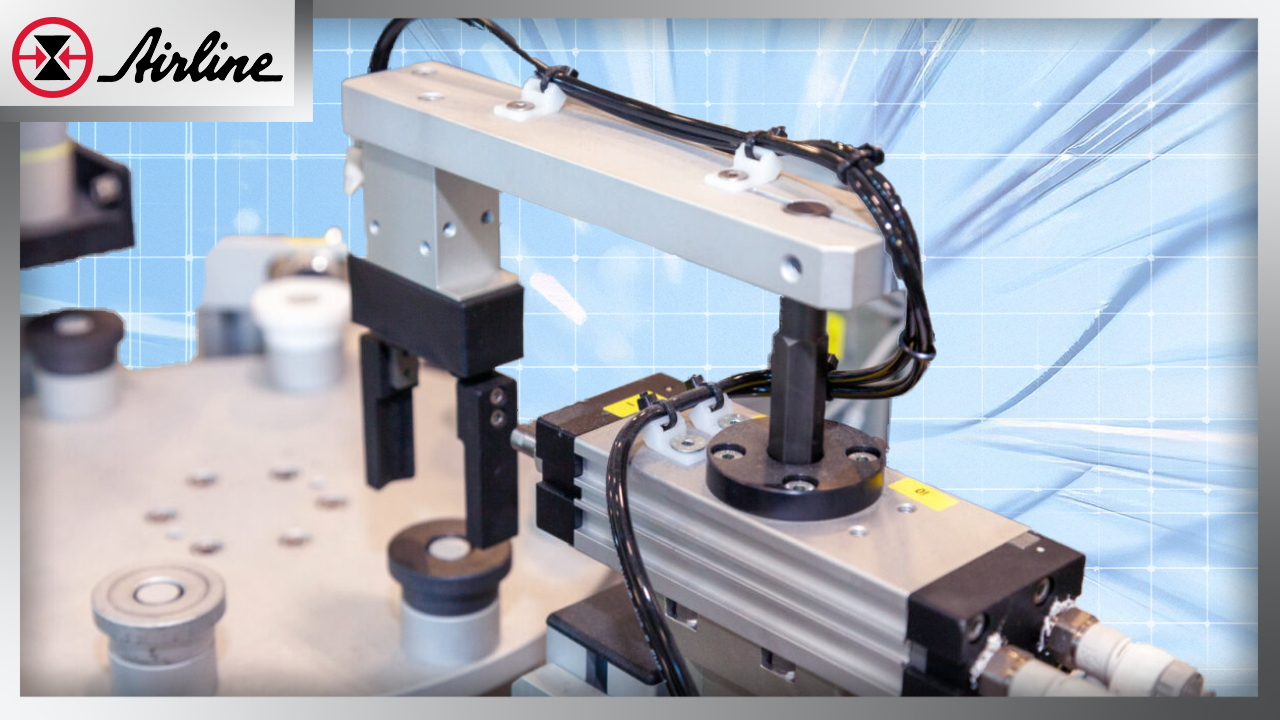

When a pneumatic system won’t hit timing, the limiting factor is often airflow, not pressure. If you need faster fill/vent performance but can’t keep upsizing valves and manifolds, a booster valve can be the most straightforward answer.
This post is a quick breakdown of the issue, alternatives, and a direct look at Clippard’s PHV Series booster valve for high-flow, manifold-mount applications.
Table of Contents (Jump to a Section):
The Problem | The Usual "fixes." | The cleaner approach | Clippard's PHV Series High Flow Booster Valve | Where it's a strong fit | Two Quick Design Notes
-1.png?width=524&height=174&name=PHVValve-BannerTOPblog%20(explore-more)-1.png)
The problem: pressure is available, but flow is the bottleneck
If your machine is waiting on air, it often looks like one (or more) of these:
Large cylinders fill too slowly, even with adequate supply pressure
Blow-off is inconsistent, especially when you need short, sharp bursts
Vacuum response lags, which can push pick-and-place timing out of spec
Venting takes too long, so the machine waits for pressure to drop before the next step
In other words, the actuator may be fine. The restriction is usually the flow path.
The usual “fixes” (and what they cost you)
Here are the most common ways engineers try to get more flow. They work sometimes, but each has a tradeoff.
1. Upsize the Valve
What you gain: more flow
What you pay: more space, more power draw, more heat, and often a heavier manifold layout
2. Use two valves in parallel
What you gain: “added” flow (sometimes)
What you pay: more parts, more wiring, more I/O, and uneven flow sharing if the paths aren’t matched
3. Add a remote big valve and pilot it with a small valve
What you gain: high flow using a small pilot signal
What you pay: extra assembly, extra tubing, and more ways to add restriction or delay.
4. Add a quick exhaust
What you gain: faster venting (one direction of the problem)
What you pay: you still may have slow fill, and you add more components to package.
5. Increase tubing size and "clean up restrictions"
What you gain: sometimes a real improvement
What you pay: it can turn into a redesign, and it still doesn’t fix a valve that’s undersized for the job.
This can also increase the volume in the system, requiring more air and therefore costing more energy.
A cleaner approach: Use a small pilot signal to open a high-flow path
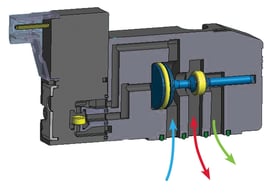
A booster valve approach lets you keep the control side compact while still moving a lot of air quickly. The control valve sends a pilot signal, and the booster valve handles the heavy flow. That’s the design idea behind the PHV Series.
Introducing Clippard PHV Series High Flow Booster Valve
The PHV Series is a compact, pressure-piloted booster valve designed for manifold mounting and fast, high-flow performance.
-3.png?width=320&height=199&name=image%20(1)-3.png) Key performance points:
Key performance points:
- Output flow up to 400 l/min at 100 psig
-10 ms nominal response time
-Low power consumption (helpful in heat-sensitive or power-limited designs)
-3-way, normally closed configuration
-Two pilot size options: 10 mm or 15 mm
The takeaway: the PHV is aimed at the exact situation where you need a fast, high-flow “push” or “dump” of air but don’t have room (or power budget) to keep scaling up the main valve package.
Where the PHV tends to be a strong fit
Clippard calls out these common uses for the PHV Series:
-High-speed automation
-Large-volume dosing / gas delivery
-Quick venting systems
-Vacuum generation and venturi control
-Blow-off and purge operations
-Packaging machinery and test stands
If your application is volume-heavy and timing-sensitive, that’s usually where a booster valve earns its spot.
-1.png?width=4056&height=1345&name=PHVValve-Bannerblog%20(explore-more)-1.png)
Two quick design notes before you spec any high-flow valve
-
-
-
-
1. Don’t ignore the plumbing. A high-flow valve feeding undersized fittings and restrictive runs won’t deliver its full benefit.
-
2. Place it with intent. If the goal is fast fill/vent at the point of use, long tubing runs can add delay you can’t tune out later.
-
-
-
Need help selecting or applying the PHV in your circuit?
Airline Hydraulics can review your application, help size the valve and flow path, and support you from prototype through production.




Leave Comment